FAQs
- the area or location to which the licence applies;
- the number, type, form and construction, as the case may be, of any furniture which may be used in the alfresco dining area;
- the care, maintenance and cleaning of any furniture used in the alfresco dining area;
- the removal and storage of furniture used in the alfresco dining area prior to the closure of the adjacent food business;
- the alfresco dining area not impeding or obstructing a public place used by either pedestrians or vehicles;
- the requirement to maintain clear sight lines for vehicles entering or leaving a thoroughfare or a vehicle crossing;
- the obtaining of public risk insurance in an amount and on the terms reasonably required by the local government;
- the grant of another approval, permit, licence or authorisation which may be required under any written law;
- the duration and commencement of the licence;
- the placement of advertising on furniture within the alfresco dining area;
- the payment of all fees, charges, rates and taxes levied or incurred as a result of the establishment and operation of the alfresco dining area; and
- the payment of costs associated with the local government preparing the public place for the use as an alfresco dining area including but not limited to the reshaping of footpaths and marking the boundaries of the alfresco dining area.
- the local government proposes to review the local law; and
- a copy of the local law may be inspected or obtained at any place specified in the notice; and
- submissions about the local law may be made to the local government before a day to be specified in the notice, being a day that is not less than 6 weeks after the notice is given.
- give local public notice stating that —
- the local government proposes to make a local law the purpose and effect of which is summarised in the notice; and
- a copy of the proposed local law may be inspected or obtained at any place specified in the notice; and
- submissions about the proposed local law may be made to the local government before a day to be specified in the notice, being a day that is not less than 6 weeks after the notice is given; and
- as soon as the notice is given, give a copy of the proposed local law and a copy of the notice to —
- the Departmental CEO; and
- if a department of the Public Service other than the Department assists in the administration of an Act under which the local law is proposed to be made — the chief executive officer of that other department; and
- provide a copy of the proposed local law, in accordance with the notice, to any person requesting it.
- publish the local law in the Gazette; and
- give a copy of the local law to —
- the Departmental CEO; and
- if a department of the Public Service other than the Department assists in the administration of an Act under which the local law is made — the chief executive officer of that other department.
- stating the title of the local law; and
- summarising the purpose and effect of the local law (specifying the day on which it comes into operation); and
- advising that the local law is published on the local government’s official website and that copies of the local law may be inspected at or obtained from the local government’s office.
What is the Alfresco Dining Local Law?
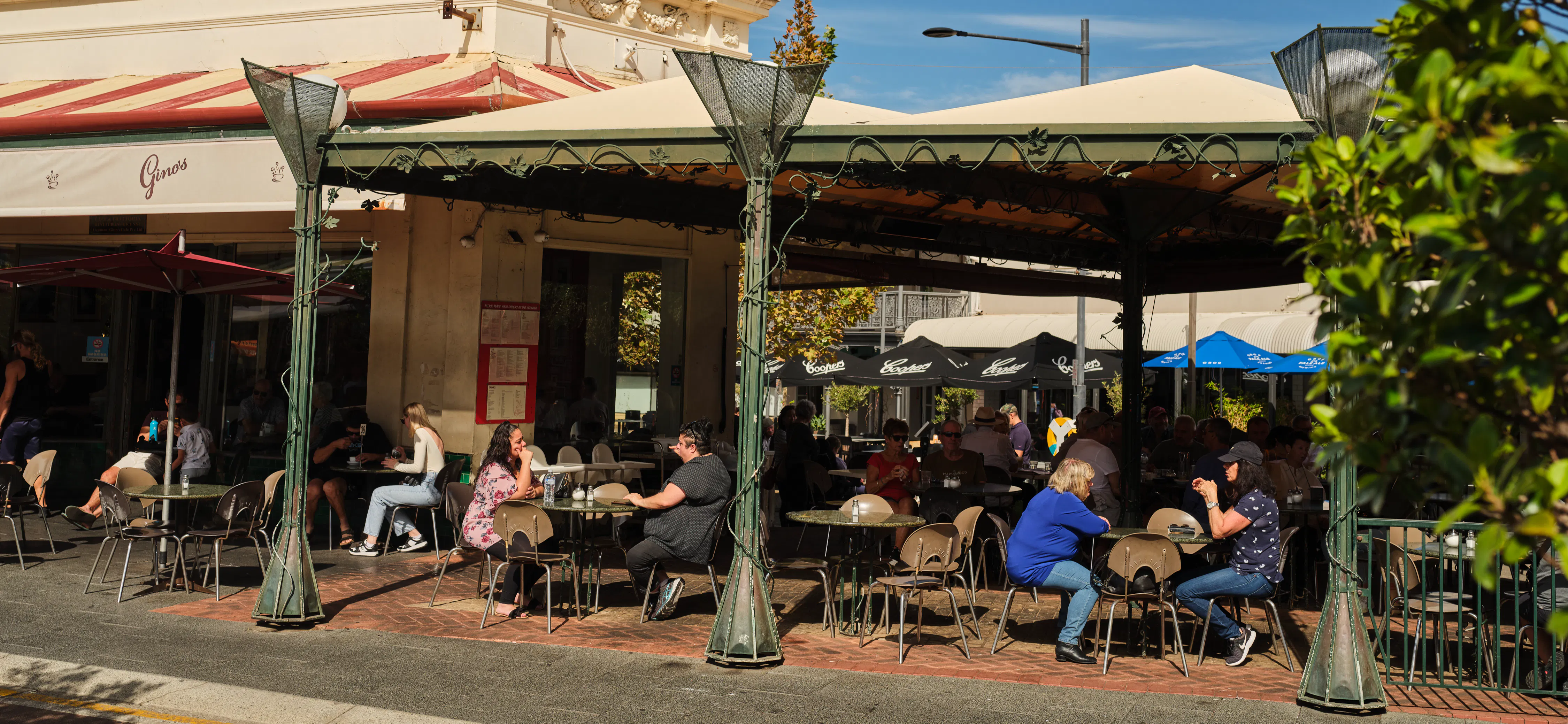
The Alfresco Dining Local Law provides the framework for managing alfresco dining on public land in the City of Fremantle. It requires eligible food businesses to obtain a licence and enables the City to place conditions on how alfresco areas are established and operated.
What is the difference between the Alfresco Dining Local Law and the Alfresco Dining Council Policy?
The Local Law provides the legal framework for licensing and regulating alfresco dining in public places. The Alfresco Dining Policy provides more detailed guidance about how alfresco areas should be designed and located, including requirements relating to pedestrian access, tables and chairs and the relationship between an alfresco area and the adjoining business.
The Policy can be reviewed separately from the Local Law and is not part of this consultation. Feedback on the policy may be considered for future policy amendments.
Why does the City have an Alfresco Dining Local Law?
The Local Law allows the City to support alfresco dining while managing the use of public space. This includes balancing opportunities for outdoor dining with pedestrian access, accessibility, traffic safety and the appropriate use of footpaths and other public areas.
How does the City ensure alfresco dining areas remain accessible?
Alfresco dining areas must not obstruct pedestrian movement. The City's Alfresco Dining Policy generally requires a minimum clear pedestrian path of 1.5 metres to 2.1 metres, depending on pedestrian traffic volumes and the location. Pedestrian routes should be unobstructed and enable normal use of the footpath without people having to step onto the road or make other unwarranted detours.
Are any changes to the Local Law currently proposed?
No. No changes are proposed at this stage. The purpose of this consultation is to hear from the community before Council determines whether the existing Local Law should remain unchanged; or be amended or repealed.
Why have officers recommended the Alfresco Dining Local Law 2014 remain unchanged?
An alfresco dining licence is required when a food business within the City of Fremantle wishes to set up and conduct an alfresco area on council land. The alfresco areas must be compliant with the Alfresco Dining Local Law 2014.
The Alfresco Dining Local Law 2014 allows conditions per license which relate to:
The City also has an Alfresco Dining Council Policy which supports the local law for placements of tablets and chairs on footpaths and public places. The policy provides clear requirements that would otherwise be a condition set by an authorised officer under the local law.
The State Government has proposed that the Local Government (Uniform Local Provisions) Regulations 1996 be amended to allow local businesses to set up an alfresco dining area and place portable advertising signage outside their business without needing an approval from their local government. Similarly, the process to apply to a local government for other forms of obstruction of the thoroughfare, such as erecting a parklet, will be standardised.
It is aimed that these reforms will help cut red tape for local businesses and promote vibrant main streets which stimulate the local economy and build stronger local communities.
There is currently no commencement timeframe, however officers predict that this will be released in the next 2 to 5 years.
Until the State Government release what changes will be included in the reform amendments, and what needs to remain in the local law (if any), officers do not recommend changes at this time.
Council has the ability to amend the Alfresco Dining Council Policy at any time.
Read more about alfresco dining areas in Fremantle via this link.
Why is the City asking for feedback if no changes are proposed?
The review process provides the community with an opportunity to comment on how the existing Local Law is working before Council makes its determination. Feedback may identify issues with the existing Local Law or matters Council should consider as part of its review.
Which provisions require local governments to review local laws within the next 2 years?
Schedule 9.3, Division 7, Clause 65 of the Local Government Act 1995 provide provisions for periodic reviews of local laws in relation to the 2024 amendment act.
The City of Fremantle is now required to review any local laws that are either due or overdue for a review. This must be undertaken within a two-year period, prior to 7 December 2026, unless a review occurred within the last 8 years. If this review does not occur, the local laws that have not been reviewed within this timeframe they will automatically be repealed.
What is the local law process?
Review Process:
Within a period of 15 years after the day on which a local law commenced or a determination in respect of the local law was last made under section 3.16 subsection (4), as the case requires, a local government must carry out a review of the local law to determine whether it considers that the local law should be repealed, be amended or remain unchanged.
The local government is to give local public notice stating that —
After the last day for submissions, the local government is to consider any submissions made and cause a report of the review to be prepared and submitted to its council.
After the report has been submitted to its council, the local government must determine whether it considers that the local law should be repealed, be amended or remain unchanged.
No changes to existing Local Laws:
The minutes of the meeting at which the local government determine that the local law remain unchanged are published on the City's website.
The local government is not required to advertise the decision further.
New and Amendment Local Laws (not a model local law):
At a council meeting the person presiding is to give notice to the meeting of the purpose and effect of the proposed local law in the prescribed manner.
The local government is to —
After the last day for submissions under subsection, the local government is to consider any submissions made and may make the local law as proposed or make a local law that is not significantly different from what was proposed.
After making a local law, the local government must —
After the local law has been published in the Gazette the local government is to give notice in the required way —
If during the procedure for making a proposed local law the local government decides to make a local law that would be significantly different from what it first proposed, the local government is to recommence the procedure.
Unless it is made under section 3.17, a local law comes into operation on the 14th day after the day on which it is published in the Gazette or on such later day as may be specified in the local law.
Repeal of Local Law:
The process for making local laws applies.
What happens if this review identifies that changes are needed?
Community submissions will be reviewed and presented to Council. Council will then determine whether the Local Law should remain unchanged, be amended or repealed. If Council decides to amend the Local Law, a separate statutory process would be required.